Are piano keys too big?
17 September 2026, 13:48


Classical music’s most famous instrument was built for men. Is it time for a new design?
Listen to this article
Loading audio...
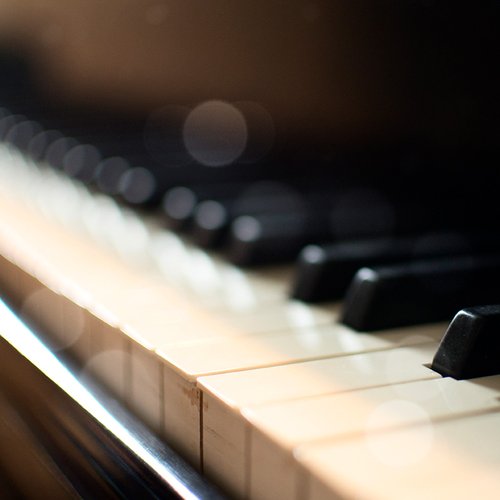
A standard piano keyboard could put female (and smaller-handed) players at a distinct disadvantage, according to new Stanford-led research. Concert pianist and Stanford professor Elizabeth Schumann is leading the study after discovering the difference a narrower keyboard made to her own playing.
Trying a piano with a 6-inch octave span, half an inch smaller than today’s standard 6.5-inch measurement, she said: “I felt like I’d been wearing the wrong size shoes my entire life.”
The modern keyboard was standardised around 1880, during an era dominated by virtuosic paddle-hands such as Franz Liszt. Its proportions have remained largely fixed, despite string instruments being produced in a range of sizes to suit different players. Schumann’s research suggests that this uniformity disproportionately affects women.
Read more: Engineers invent piano-playing robotic hand that can learn music by ‘ear’

Grieg's Piano Concerto Finale LIVE - Alice Sara Ott
A 2015 survey of 473 adult pianists found that just 13% of women could comfortably play repeated fast octaves on a standard keyboard, compared with 76% of men. “People are blaming themselves and their bodies instead of asking if there’s a design problem,” Schumann said.
In the first phase of the Stanford experiment, advanced pianists performed scales, trills, tremolos and chords on both conventional and narrower keyboards. Researchers assessed speed, accuracy and key velocity — an indicator of force and volume. The greatest improvement on the narrower model was seen among pianists whose comfortable hand span reached only an octave. Schumann said the findings indicate “a performance ceiling imposed on people with smaller hands because of the standard instrument.”
The team is now pairing performance data with 3D motion capture and AI-based biomechanical modelling of the hand and forearm. Fifteen elite pianists have contributed around 10 hours of movement data across more than 150 works.
Read more: The 20 best piano concertos of all time

Professor Ian Jones, deputy head of keyboard at the Royal College of Music, said: ”I had the pleasure of being invited by Elizabeth Schumann to give a masterclass at Stanford in April this year and got to try the piano in question. Whilst it felt strange and disconcerting to me, not having a great deal of time on it to adjust, I applaud its development which recognises that the stretching of keyboard size in the 19th century was largely driven by the demands of male pianists with bigger hands. The new keyboard makes repertoire more accessible and more practical for smaller hands.”
“The 6-inch octave keyboard presents great opportunities for pianists with small hands, especially young pianists. This will undoubtedly open up the possibility of playing previously ’stretchy’ repertoire with a greater degree of comfort and ease,” agrees head of keyboard studies at the Royal Northern College of Music, Graham Scott,. “However, for almost 150 years pianists have been playing on a standardised keyboard size and with pianists very often being at the mercy of playing on a piano provided by the venue there would be practicalities to overcome.”
He adds: “Would the provided piano be able to accommodate the 6.5 inch action for example? Or would the promoter be happy to import such a piano? Some pianists enjoy the good fortune to be able to travel with an instrument of their choosing whilst the majority normally have to play what is offered.”

A Piano Suitable For Playing Liszt (Small Key Piano)
British classical pianist Mishka Rushdie Momen thinks it’s more nuanced than keyboard size. “Any pianist’s relationship to their instrument is highly individual and personal and will evolve over many years," she says. "Hand size is just one small part of it. The whole body is involved in playing the piano, not only the hands and it is affected by everything from the height and distance of the piano stool to the way the feet use the pedals. Hopefully, these elements should all combine to enable an uninhibited flow of imagination from the brain to the fingertips.”
Momen adds: “I think almost everyone’s hands have some sort of shortcoming. My own hands might be smaller than I’d like, my little finger is perhaps shorter than is ideal, so certain large stretches are more difficult. On the other hand, this can be an advantage in certain works by Ravel, for example, where one has to play in the narrow space between the black keys.”