On Air Now
Calm Classics with Myleene Klass 10pm - 2am
19 October 2026, 12:16


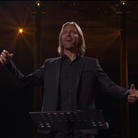
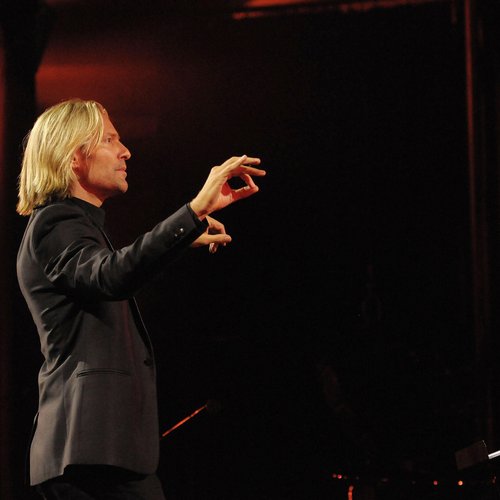
Choral composer Eric Whitacre reflects on the magnitude of space, and our place in the universe in an increasingly digital age.
From Holst’s The Planets to David Bowie’s Ziggy Stardust, Vincent Van Gogh to Steven Spielberg, musicians and artists throughout the ages have taken their inspiration from space, the great unknown, and what might lie beyond our atmosphere.
Choral composer Eric Whitacre is among those interstellar artists, first constructing his Deep Field project in 2015. With the Hubble Telescope’s world-famous Deep Field image as his stimulus, Whitacre re-told the story of Hubble from its launch, challenges along the way, and the breakthrough discovery of almost 3,000 galaxies in one tiny dark spot of the night sky.
In 2018, Whitacre worked with the Space Telescope Science Institute to produce a film to accompany his piece, and now, 11 years after it was first written, Eric Whitacre’s Deep Field is returning to the Royal Albert Hall on Tuesday 20 October.
But what is it about space that has inspired so many? For Whitacre, it all hails back to a childhood dream.
Read more: NASA releases the breathtakingly beautiful sound of the Butterfly Nebula
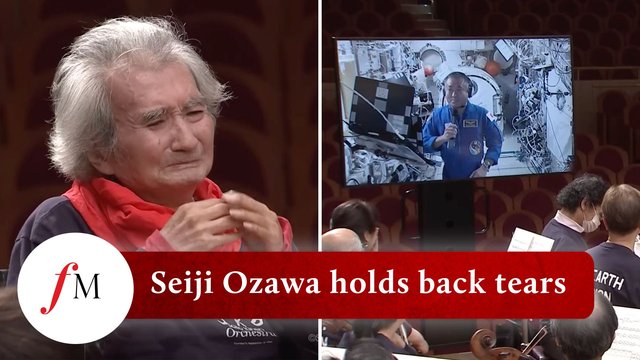
Outer-space Beethoven concert leaves legendary conductor Seiji Ozawa in tears
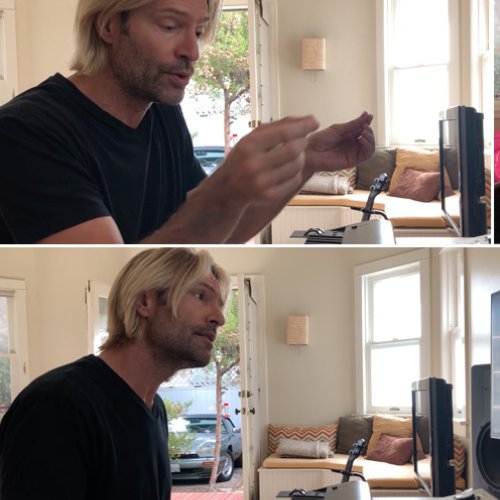
“I always wanted to be an astronaut,” Whitacre told Classic FM. “I want to go out there and actually experience this myself.”
The vastness of space, he says, is ‘inconceivable’: “The nearest star to us – just the nearest star, not even a galaxy – is over four light years away. We can’t travel at the speed of light, we can’t even come close, so it would take us tens of thousands of years to get to our closest star.
“That sense of expanse, wonder and awe is the closest I think I come to having a religious experience. It’s impossible, when presented with what space actually is and what it means, not to feel that sense of true awe, of absolute overwhelm. It taps into the most primal source.”
As for why humans in general use music to explore ideas of space, Whitacre says it’s all down to the human instinct to explore. “Humans, in our genes, are explorers,” he told Classic FM. “The earth has been pretty well mapped at this point, but space is an impossibly rich frontier.
“Music is one of the only ways we have of capturing that sense of adventure, alongside that sense of almost knee-shaking dread when you start to comprehend what you’re looking upon.”
That ‘knee-shaking dread’ is what Whitacre explores in Deep Field: “That feeling, like standing at the edge of the deepest possible water, is an emotion that’s hard to describe, but very easy to communicate with music.”
Read more: NASA releases eerie ‘singing’ from a black hole and it’s straight out of a horror movie
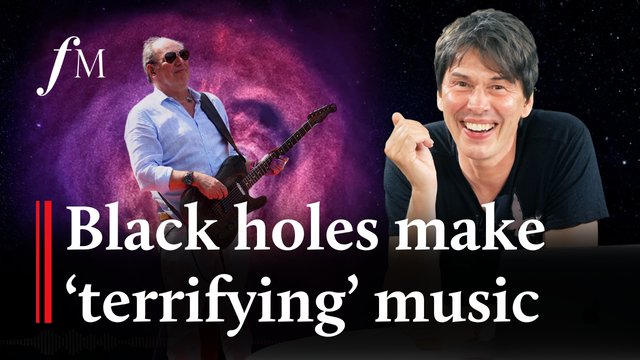
Professor Brian Cox explains how supermassive black holes 'make music' | Classic FM
Space can also be an invaluable way to gain perspective. Whitacre says it almost feels like a ‘purification’: “It gives me a total reset, almost a purification. It reminds me that whatever I’m dealing with might not be as big as it feels right now.
“I believe so strongly in the power of classical music as that kind of detox for your mind, and your attention span. There’s nowhere else in our daily life that we get to come and just be present for these long journeys.”
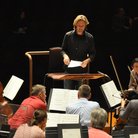
Deep Field returns to the Royal Albert Hall on 20 October 2025, performed by the Royal Philharmonic Orchestra (RPO) – a venue and ensemble that both mean a lot to Whitacre.
“The RPO is one of my favourite orchestras in the world, I love working with them. When we did the premiere, they really brought the music to life. It was just so electric,” he said. “The project was really conceived for a space like the Royal Albert Hall. That venue, in particular, is like a temple for me. Every time I visit, it really feels like a religious experience. Just standing on the stage, you feel like you’re reaching for the highest possible fruit that humanity has to offer.”
Read more: Choral composer Eric Whitacre: ‘If I could collab with any artist, it would be Kendrick Lamar’
In the concert on 20 October, Whitacre’s Deep Field will be performed alongside the film created specially for it using images from Baltimore’s Space Telescope Science Institute, with audiences also able to take part in the performance via their smartphones.
“In the piece we travel out to the Deep Field image, as far from Earth as we can get, then in the final five minutes, we come back to Earth and remind ourselves of where we are on our little pale blue dot,” he describes.
“To add to the immersive sense you get at the Royal Albert Hall, the audience are invited to use an app on their phone which plays this sparkly synthesizer sound. It was designed to make you feel like you’re floating in space, and when you have thousands of phones all playing it at the same time, the sound just glows in the hall, it’s so beautiful.”
Eric Whitacre’s Deep Field returns to the Royal Albert Hall on Tuesday 20 October as part of The Moonwalkers: Live in Concert with the Royal Philharmonic Orchestra. Tickets available here.